Make Decisions Traceable
Good manufacturing is not created only by results, but by the decisions that lead to them. When those decisions are described, structured, and justified, strategies become more understandable and usable for other users.
Knowledge Management
We support companies in keeping manufacturing knowledge from being lost in individuals, files, and habits by turning it into reliable structures. This makes strategies, rules, and decision logic usable for teams and repeatable in daily work.

What We Mean by Knowledge Management
For us, knowledge management does not mean storing as much information as possible. What matters is which manufacturing strategies, decision logic, tool rules, experience, and process patterns are actually relevant in daily work and how they can be prepared so that multiple people can work with them safely.
In many companies, this knowledge is already there, but it is not clearly accessible. It lives in people’s heads, in old programs, in personal files, in informal routines, or in silently learned decisions. As long as this knowledge is not moved into reliable structures, it remains person-dependent, hard to scale, and only of limited use for automation, onboarding, and cross-site collaboration.
Where Knowledge Management Becomes Relevant
Knowledge management is not an end in itself. It creates value where decisions become more traceable, onboarding becomes faster, quality becomes more stable, and manufacturing knowledge is no longer tied to individual people.
Good manufacturing is not created only by results, but by the decisions that lead to them. When those decisions are described, structured, and justified, strategies become more understandable and usable for other users.
New employees or new sites can only become productive faster if not every approach has to be reinterpreted from scratch. Structured knowledge shortens onboarding times and reduces dependence on informal knowledge transfer.
As long as knowledge exists only in individuals, collaboration remains vulnerable. Only when rules, strategies, and process patterns are clearly prepared can knowledge be used, checked, and further developed jointly by teams.
Rule-based CAM automation and AI work only on the basis of structured knowledge. If decisions, standards, and relationships are not clearly described, they cannot later be used reliably in digital form.
Building Blocks of the Solution
Knowledge management in manufacturing does not arise from a single central document. What matters is a structure in which knowledge can be described, understood, and actually applied in day-to-day work.
Recurring approaches must be formulated as traceable strategies: when roughing, finishing, probing, fixturing, or verification is carried out, and under which conditions.
Knowledge only becomes usable for teams when not just the result, but also the underlying logic is transparent. That is what creates reliable standards and consistent decisions.
Libraries, rule sets, process modules, and reusable templates create a structure in which knowledge is not just described, but can be applied directly in day-to-day work.
Real knowledge management does not end with reading. The goal is to prepare knowledge in a way that people, teams, and later also digital systems or automation solutions can build on it.
Why Knowledge Management with Pimpel
Knowledge management in manufacturing cannot be solved through generic documentation logic. It is not enough to store content or assign responsibilities. What matters is whether strategies, rules, experience, and dependencies are properly understood technically, described clearly, and prepared in a way that is actually usable in daily work.
We do not treat knowledge management as a filing exercise. In CNC manufacturing it is about decisions: which tool, which strategy, which setup, which measuring process, which machine-specific detail. When this knowledge is described clearly and made usable, it helps with onboarding, consistent programming and later automation.
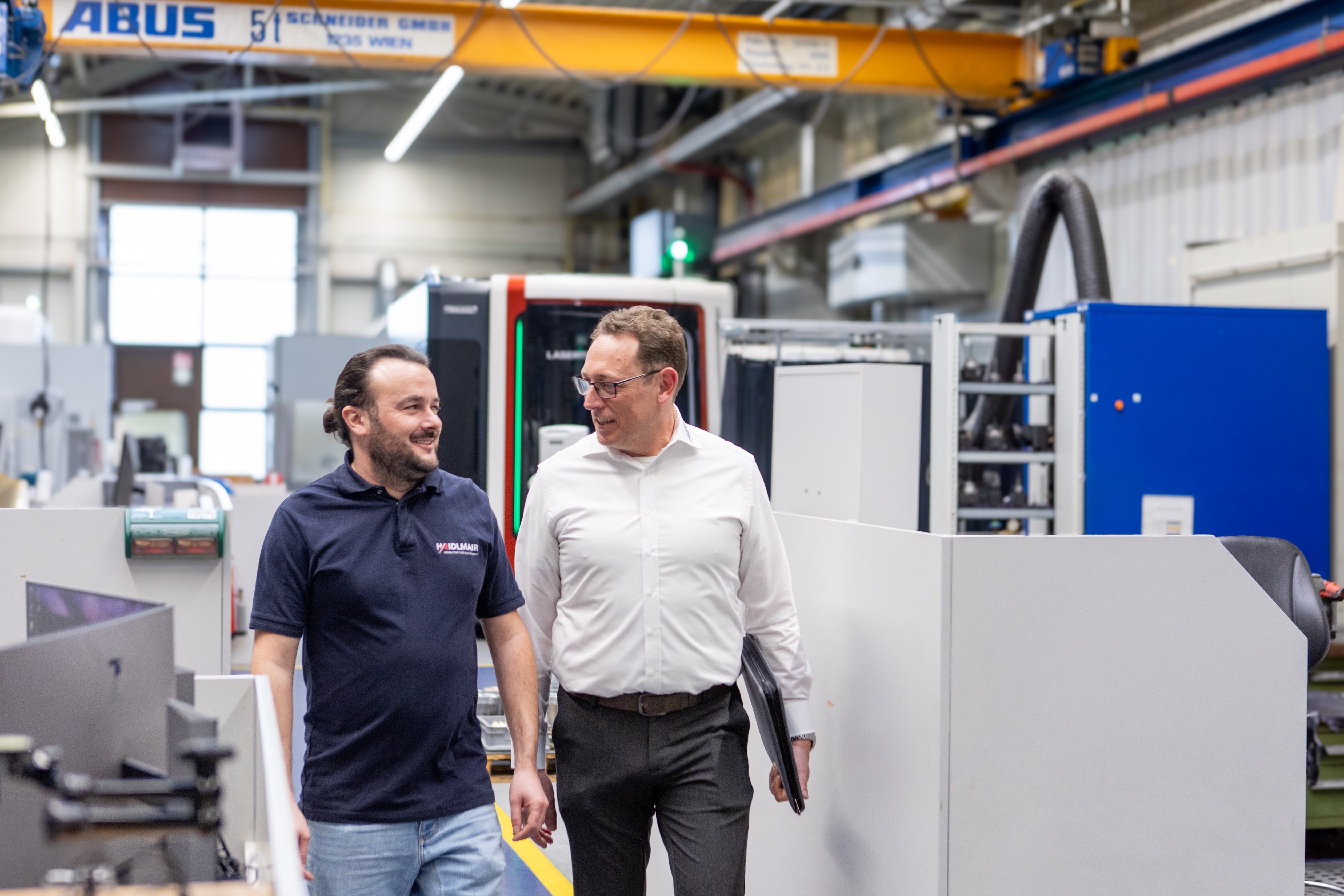
Customer story
FILL connected 3D CAD, PRO.FILE, ERP, tool presetting, ESPRIT and CHECKitB4 into an end-to-end workflow from the model to verified manufacturing.
Task
CAD, PDM, ERP, tool presetting and NC programming had grown as separate systems. The goal was a continuous path from the 3D model to the verified CNC program.
Solution
Pimpel integrated ESPRIT into the existing FILL IT landscape with PRO.FILE, Infor ERP, Zoller tool presetting, KnowledgeBase and CHECKitB4.
Customer value
Automated programming steps, less manual transfer, unified manufacturing knowledge and around 30 percent more efficiency in the CAM process.
„When I was able to leave the machine after loading the program and calmly go for a coffee while parts were produced from the start, I knew our vision had become reality.“
FAQ
In knowledge management, the issue is rarely documentation alone. What matters is how manufacturing knowledge is described and prepared so that teams can actually use it. The following questions address exactly those points.
Orientation meeting
We discuss which knowledge is currently tied to individuals, files, or routines and how it can become more usable for CAM, work preparation, and production.