AI & CAM Automation

CAM automation starts with repeatable decisions, not with AI

Many CAM tasks repeat: tool selection, strategies, features, cutting data, operation sequences and verification routines. We help structure this logic so programmers spend less time on routine work and more time on demanding decisions.

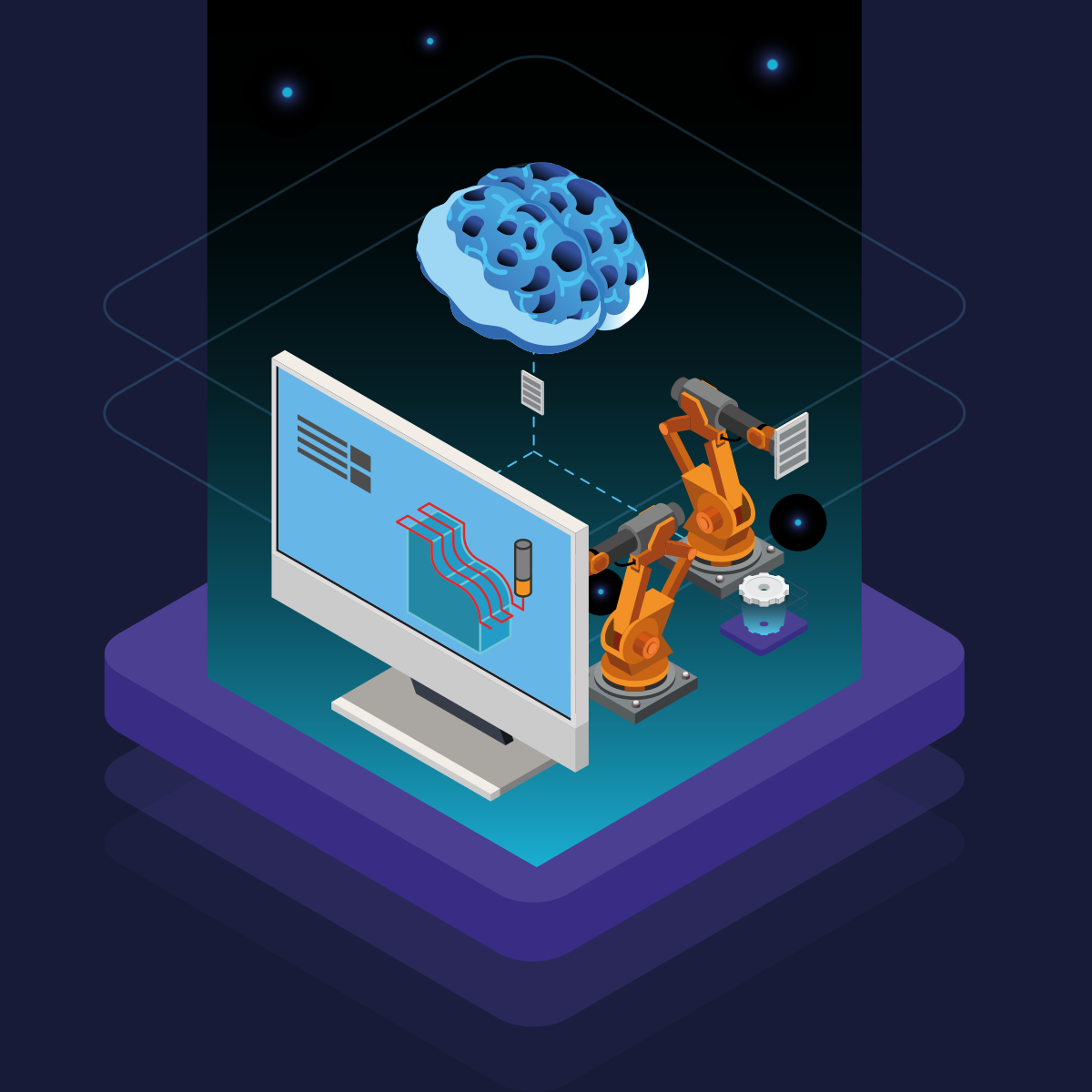
Isometric Illustration of AI and CAM Automation
AI and CAM Automation in CNC Manufacturing

What We Mean by AI & CAM Automation

Rules first, automation second, AI later

AI cannot fix vague CAM knowledge. Before automation works, recurring decisions must be understood: Which geometries occur? Which tools are preferred? Which strategies are approved? Which machines are involved? Which exceptions exist?

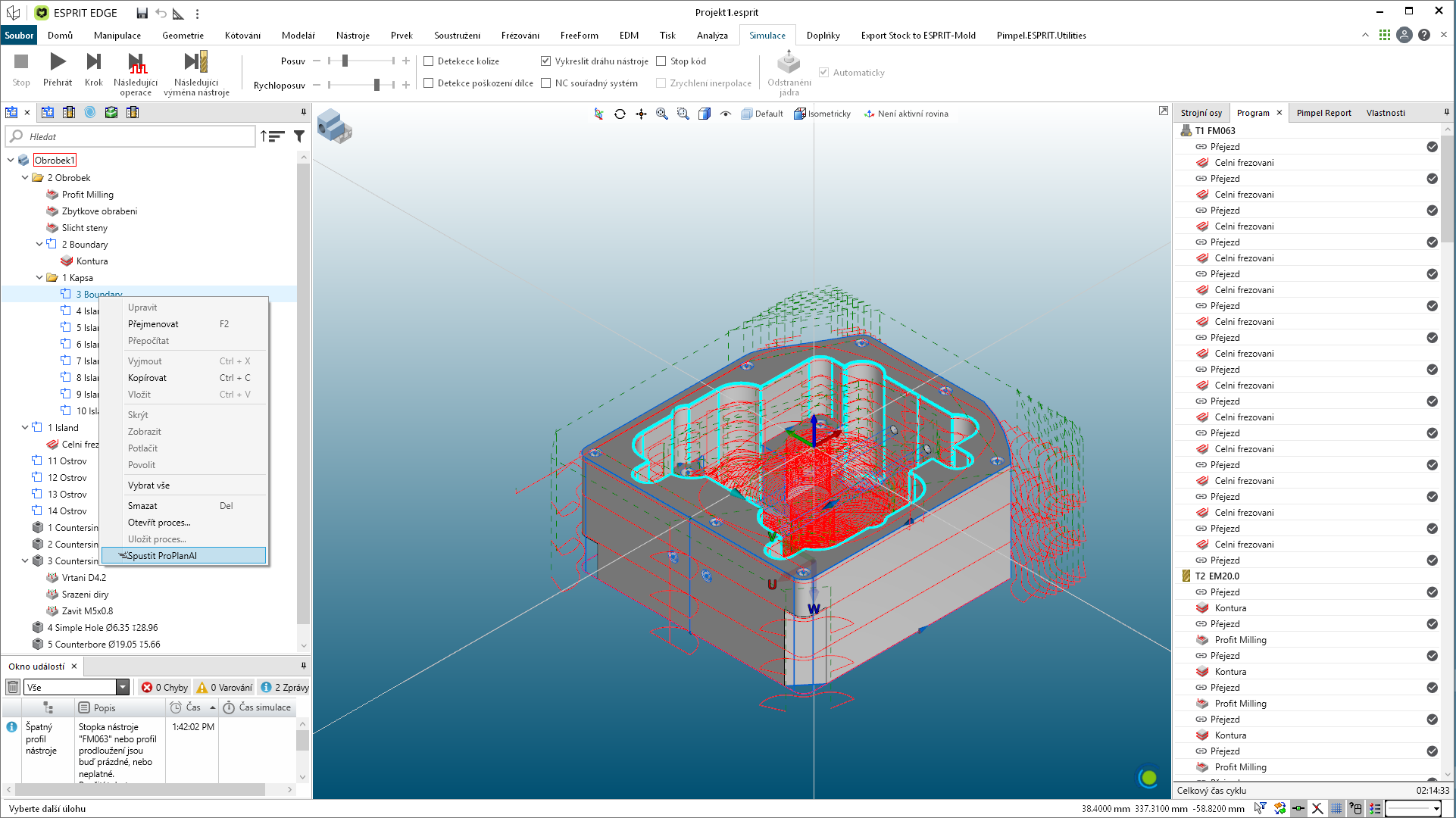
Rule-based automation is often the reliable starting point. AI can support later - for suggestions, pattern recognition or access to know-how. It does not replace the underlying work on tool data, feature logic, standards and verification processes. ai_cam_automation_starting points_badge = Where AI & CAM Automation Becomes Relevant ai_cam_automation_starting points_title = Four Factors That Make CAM Automation Economically Relevant ai_cam_automation_starting points_text = Value is created where CAM programmers no longer have to make the same known decisions from scratch: tool selection, strategies, cutting data, feature sequences, templates and checking rules. The clearer this work is described, the more reliably it can be automated or supported by AI. ai_cam_automation_starting point_1_title = Standardize Recurring Decisions ai_cam_automation_starting point_1_text = Many CAM workflows are not creative one-off work, but recurring decisions around tools, strategies, cutting data, feature sequences, and process patterns. If these decisions are clearly described and systematically structured, manual effort drops significantly and programming becomes more repeatable. ai_cam_automation_starting point_2_title = Make Experience Digitally Usable ai_cam_automation_starting point_2_text = In many manufacturing environments, valuable CAM knowledge exists in people’s heads, individual files, or informal routines. AI and rule-based automation only become effective when that knowledge is transferred into reliable rules, templates, and usable structures. This makes know-how available to teams and usable over the long term. ai_cam_automation_starting point_3_title = Reduce Programming Time in a Targeted Way ai_cam_automation_starting point_3_text = Not every step in CAM programming has to be rethought manually. Feature recognition, prepared decision logic, suggested strategies, and reusable process patterns help shorten programming times without leaving technical quality to chance. ai_cam_automation_starting point_4_title = Increase Consistency Despite Variability ai_cam_automation_starting point_4_text = Especially with high part variety or changing users, a wide range of approaches quickly emerges. Automation does not eliminate all variability, but it creates a framework in which comparable cases are handled more consistently. This increases stability, simplifies onboarding, and reduces unnecessary differences in program quality.
Nutzen für die Fertigung

Mehr Programmierleistung ohne mehr Personal

Der Nutzen zeigt sich, wenn mit derselben Mannschaft mehr fertigungssichere NC-Programme entstehen. Entscheidend ist nicht ein einzelnes schnelleres Programm, sondern mehr Output aus dem gesamten CAM-Prozess.

Wiederkehrende Arbeit reduzieren

Ähnliche Geometrien, bekannte Werkzeuge und bewährte Strategien müssen nicht bei jedem Auftrag neu aufgebaut werden. Was sich wiederholt, sollte vorbereitet und automatisiert werden.

Spezialisten entlasten

Erfahrene CAM-Programmierer sollen nicht ihre Zeit mit Routinearbeit verlieren. Sie werden dort gebraucht, wo schwierige Teile, Sonderfälle, Maschinenbesonderheiten und kritische Entscheidungen anstehen.

Neue Mitarbeiter schneller einarbeiten

Wenn Strategien, Werkzeuge und Regeln im System sichtbar sind, müssen neue Programmierer nicht alles aus Zuruf lernen. Sie arbeiten schneller nach bewährten Standards und machen weniger vermeidbare Umwege.

KI ohne Kontrollverlust einsetzen

KI darf den CAM-Prozess unterstützen, aber nicht blind steuern. Vorschläge müssen auf Werkzeugdaten, Bearbeitungsstrategien, Maschinenwissen und klaren Regeln beruhen. Die fachliche Verantwortung bleibt beim Betrieb.

Building Blocks of the Solution

Topics That Come Together in AI & CAM Automation

Reliable CAM automation is built from several elements: clear rules, clean master data, suitable part families, fitting postprocessors and users who can assess the results professionally.

Rule-Based Process Logic

Recurring decisions first have to be described as clear rules, standards, and exceptions. Without this basis, automation remains arbitrary or unstable.

Feature and Geometry Understanding

Automation requires a reliable understanding of part features, machining relationships, and which geometries can actually be standardized meaningfully.

Reliable Foundations for Automation

Tools, cutting data, templates, machine logic, and experience must be available in a clear and usable form if automated or AI-supported suggestions are to be generated from them.

AI-Supported Assistance

AI is valuable where it recognizes patterns, generates suggestions, makes knowledge available more quickly, or accelerates decision logic. Its value does not lie in replacing the user, but in targeted support for qualified technical work.

Why AI & CAM Automation with Pimpel

Because Automation in CAM Does Not Begin with an Algorithm, but with a Proper Understanding of Manufacturing Reality

AI and CAM automation are often treated too quickly as software topics. In practice, however, the groundwork comes first: Which part families can actually be standardized, which decisions truly recur, which foundations are reliable, and where automation creates economic value.

We do not treat CAM automation as a pure software rollout. The decisive questions are which machining steps really repeat in your production, which tools and cutting data are maintained reliably, how the machines are connected and where manual effort is actually created. On that basis it becomes clear which automation is technically useful and where AI should simply support qualified work.

AI and CAM Automation with Pimpel

Customer story

Pitmatec manufactures lot size 1 automatically with CHECKitB4

Pitmatec combines Hermle automation, standardized workflows and CHECKitB4 into a digital run-in process for complex single parts.

Task

Highly complex single parts and small batches had to be manufactured economically, automatically and with maximum process reliability.

Solution

CHECKitB4 virtually maps the Hermle machines and checks CAM programs as well as ShopMill programs created directly on the Siemens control before the real run.

Customer value

Safe unmanned manufacturing from lot size 1, less run-in effort, high machine availability and a fully digitally verified process chain.

„CHECKitB4 has raised our manufacturing to a new level. Today we can manufacture parts unmanned that used to require a lot of run-in time.“
David Pitan · Technical Managing Director, Pitmatec

FAQ

Frequently Asked Questions About AI & CAM Automation

The following questions reflect what manufacturing managers, project leads and CAM teams often ask: what can be automated, where does expert judgement remain essential and how can you start without building unnecessary complexity?

What does AI in CAM programming mean in practical terms
In CAM today, AI mainly means making recurring decisions, features, and process knowledge usable more quickly. Depending on the solution, this can include feature recognition, strategy suggestions, copilot functions, or knowledge-based process planning. Its real value lies in supporting qualified users and accelerating recurring programming work in a targeted way.
Does AI replace the CAM programmer
No. In reliable industrial applications, AI does not replace technical judgment - it supports it. It helps users get to suggestions, standards, and prepared process logic more quickly. Responsibility, evaluation, and approval still remain with qualified users.
What is the difference between rule-based automation and AI
Rule-based automation explicitly represents defined decisions, standards, and workflows. AI can additionally recognize patterns, derive suggestions, or make knowledge accessible more flexibly. In practice, the two approaches are not opposites, but complementary.
For which manufacturing environments is CAM automation especially relevant
It is especially relevant where recurring part families, similar decision logic, high programming effort, labor shortages, or the need for more consistent workflows come together. But automation can also be valuable in high-variation environments if partial areas, standards, or preparatory steps can be clearly structured.
What is the right way to start with AI & CAM automation
A sensible starting point is always the current situation: part families, degree of standardization, tool and data quality, machine landscape, post processors, knowledge distribution, and business goals. Only then does it become clear which processes should be automated with rules, where AI can create value, and which foundations need to be stabilized first.

Orientation meeting

Evaluate CAM Automation with Realistic Value

We look at which recurring CAM decisions, rules, and work steps can be automated in your environment and where AI can provide a useful extension.

Request orientation meeting

Weitere Angaben hinzufügen