Machine model with real kinematics
Workspace, axes, travel limits, collision contours, tools, fixtures, and workpiece must be described so that critical situations become visible during the virtual machine run.
Digital Twin
A digital twin makes a specific CNC machine tool virtually available. NC programs, postprocessors, workflows, and operator actions can be verified earlier - before machine time is tied up.
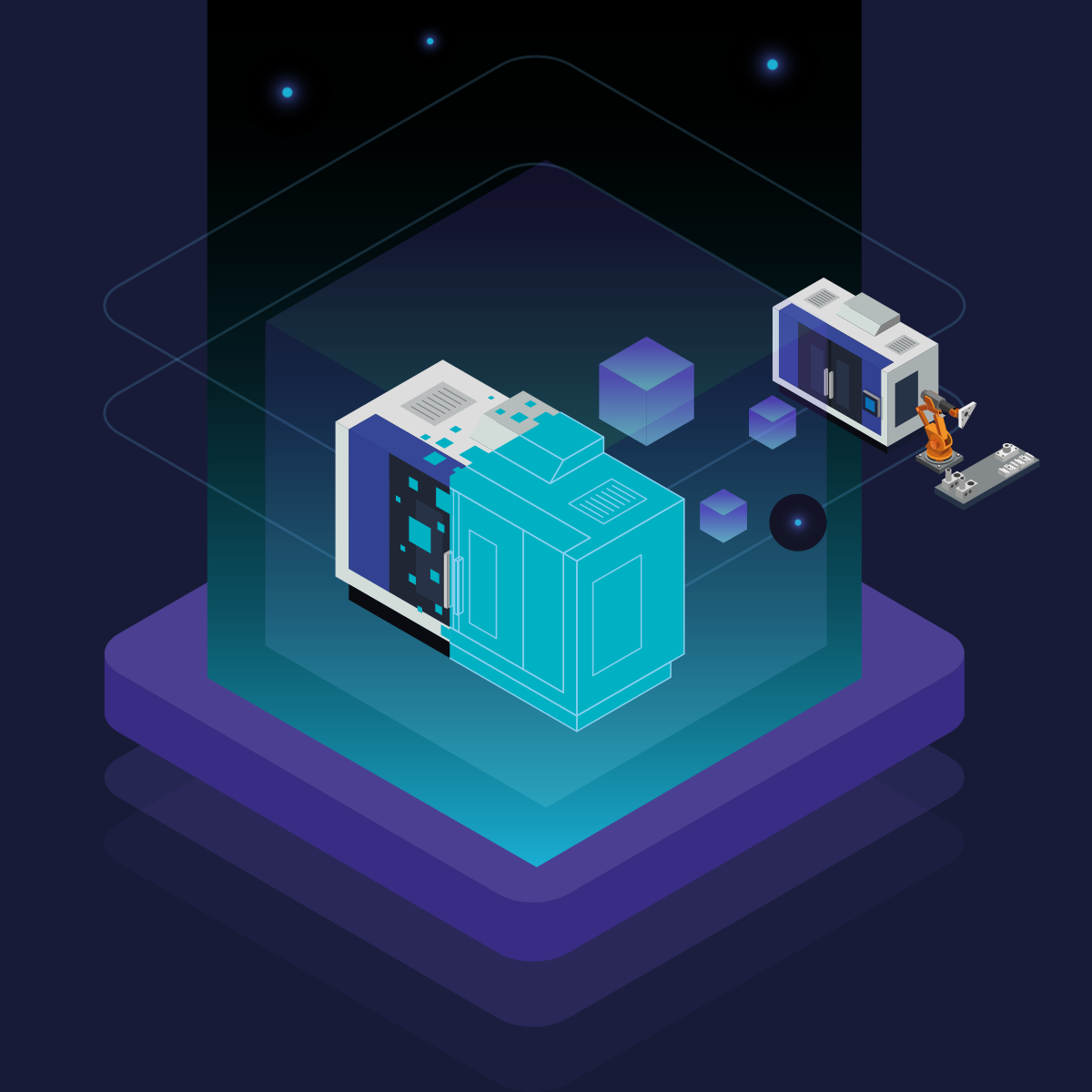
What the Digital Twin of a CNC Machine Delivers
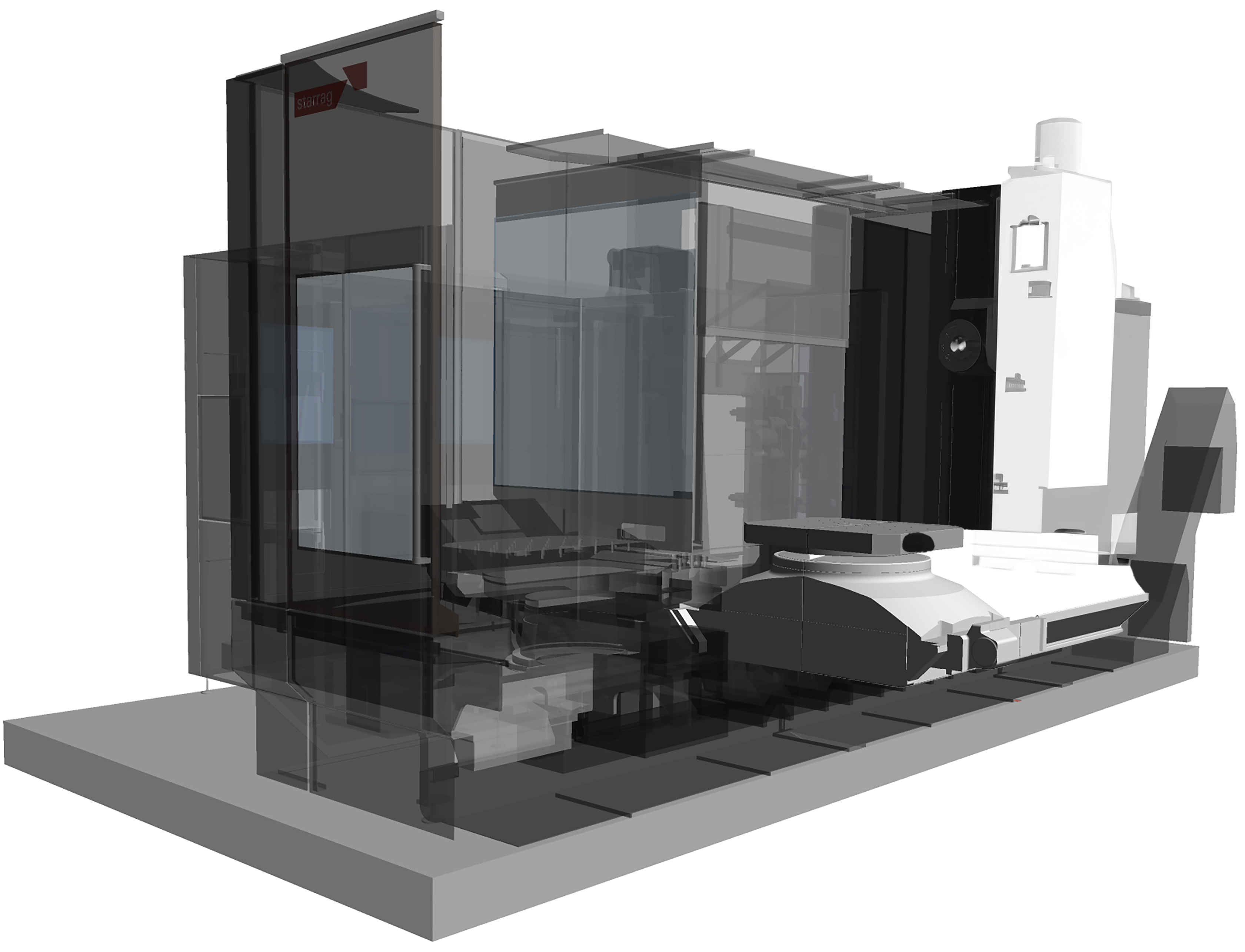
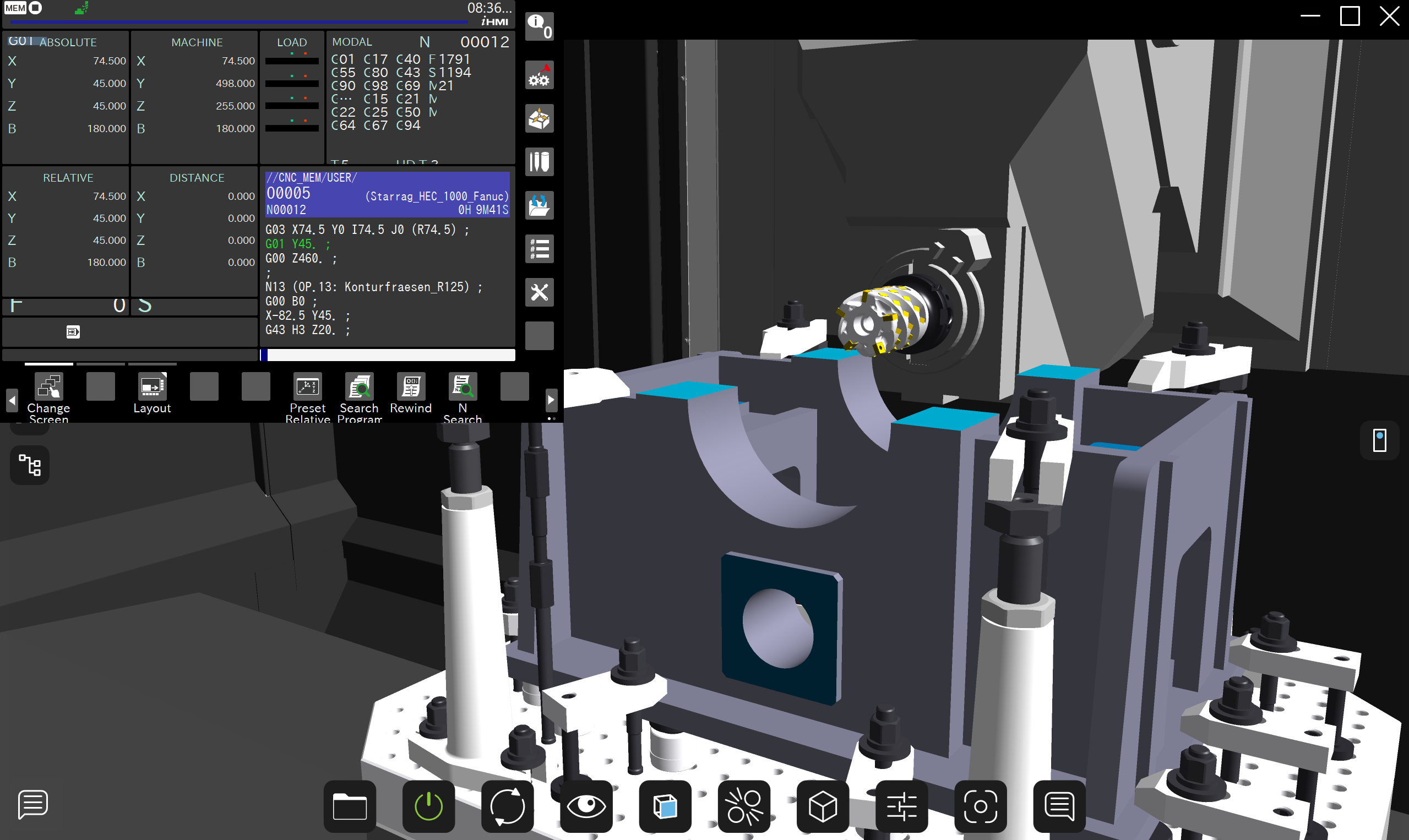
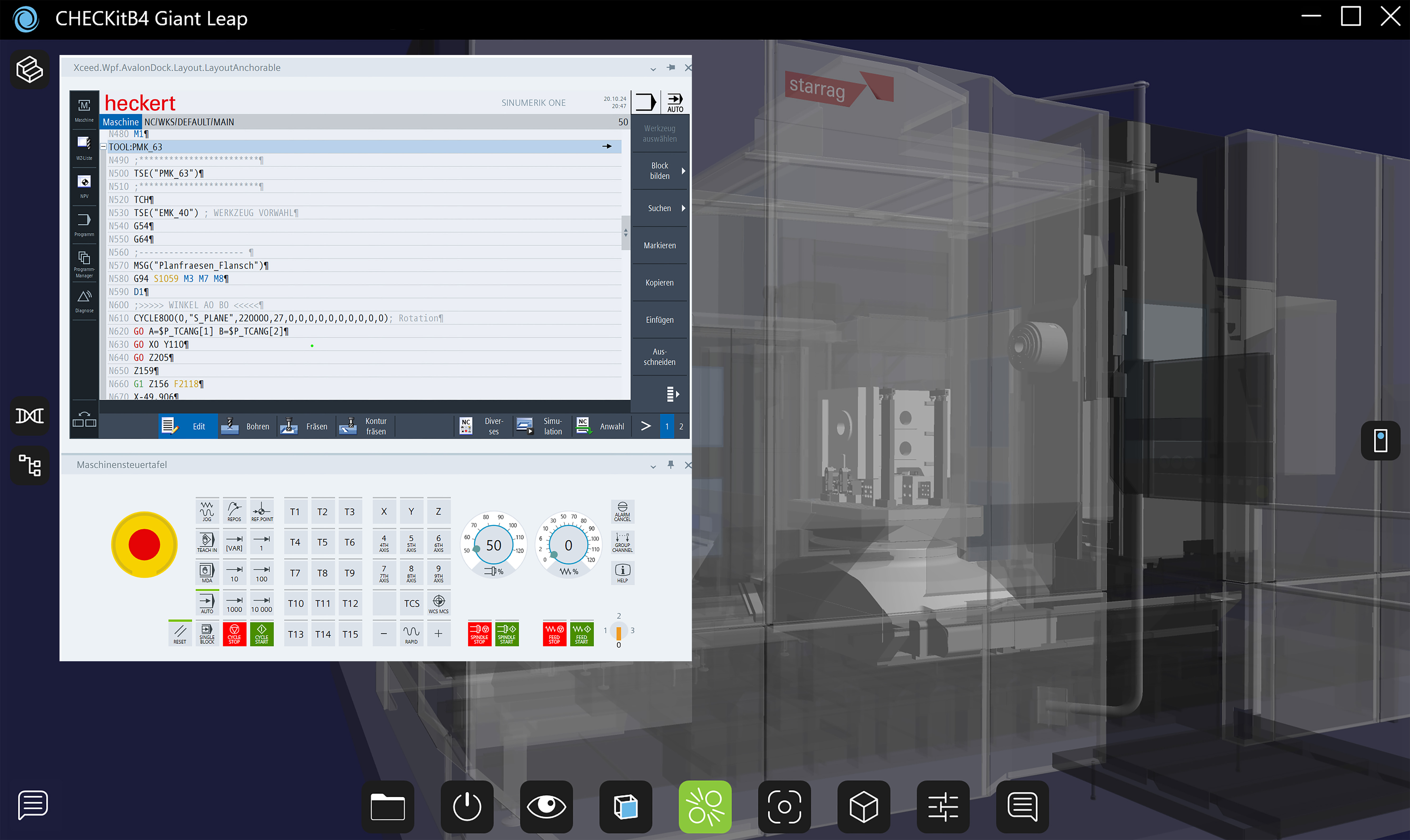
The digital twin of a CNC machine tool combines the machine’s 3D model, kinematics, tools, fixtures, workpiece data, and a virtual CNC control with the parameterization of the real machine. The movement is not merely drawn graphically; the NC program runs in the context of the specific machine.
For CAM, process planning, commissioning, and training, this makes machine behavior visible earlier. Syntax, cycles, travel limits, collisions, runtimes, and operator logic can be assessed before the real machine is blocked.
How to Recognize a Reliable Digital Twin
Not every virtual machine representation is a digital twin. What matters is whether the specific machine is represented with its control, parameters, and manufacturing environment in a way that makes conclusions relevant to the later machine run.
Workspace, axes, travel limits, collision contours, tools, fixtures, and workpiece must be described so that critical situations become visible during the virtual machine run.
The decisive difference lies in the control basis. Available virtual controls from Siemens, HEIDENHAIN, or FANUC make it possible to evaluate NC code and machine logic closer to the behavior of the real machine.
Only with axis parameters, travel limits, cycles, subprograms, and further machine-specific settings does a model become a working tool for the specific machine run.
Tools, fixtures, blank, target geometry, and setup information must be part of the virtual workflow. Only then does the value go beyond motion checking.
Value in CNC Practice
The digital twin helps where programs, new machines, operator knowledge, and cross-location preparation need to be safeguarded earlier.
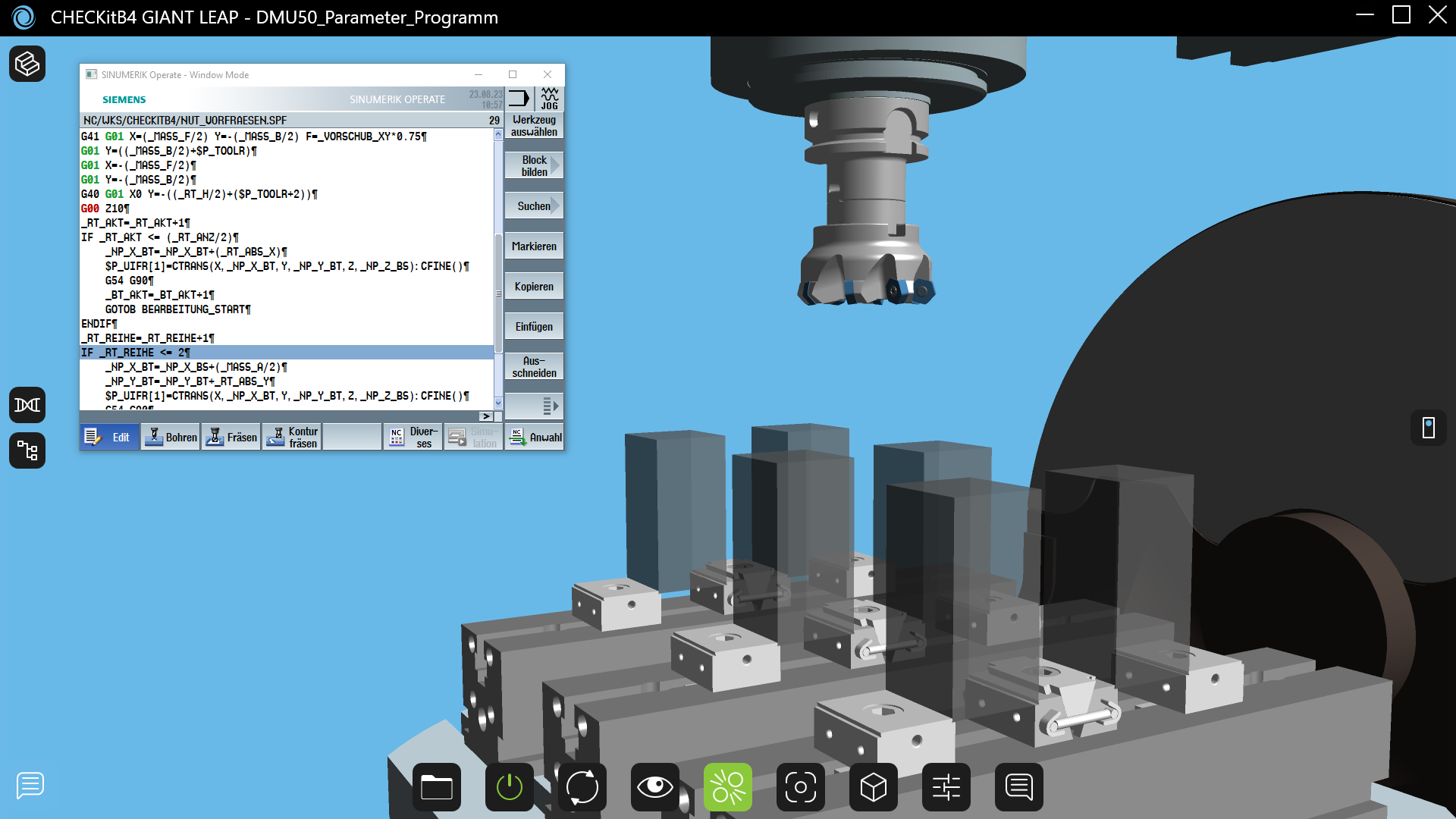
Virtual Prove-Out
During virtual prove-out, the NC program is not just shown as a graphical simulation. It is checked with machine, control, parameters, tools, and fixtures where these data are available in the digital twin.
This makes syntax errors, critical motions, collisions, workpiece damage, and runtimes visible earlier. The real machine is used less for troubleshooting and corrections.
Virtual Commissioning
When the digital twin is available early, postprocessors, first NC programs, tool and fixture concepts, and workflows can be prepared before real commissioning.
Production does not start from zero. Machine builders and users can build knowledge, verify programs, and clarify critical points earlier.
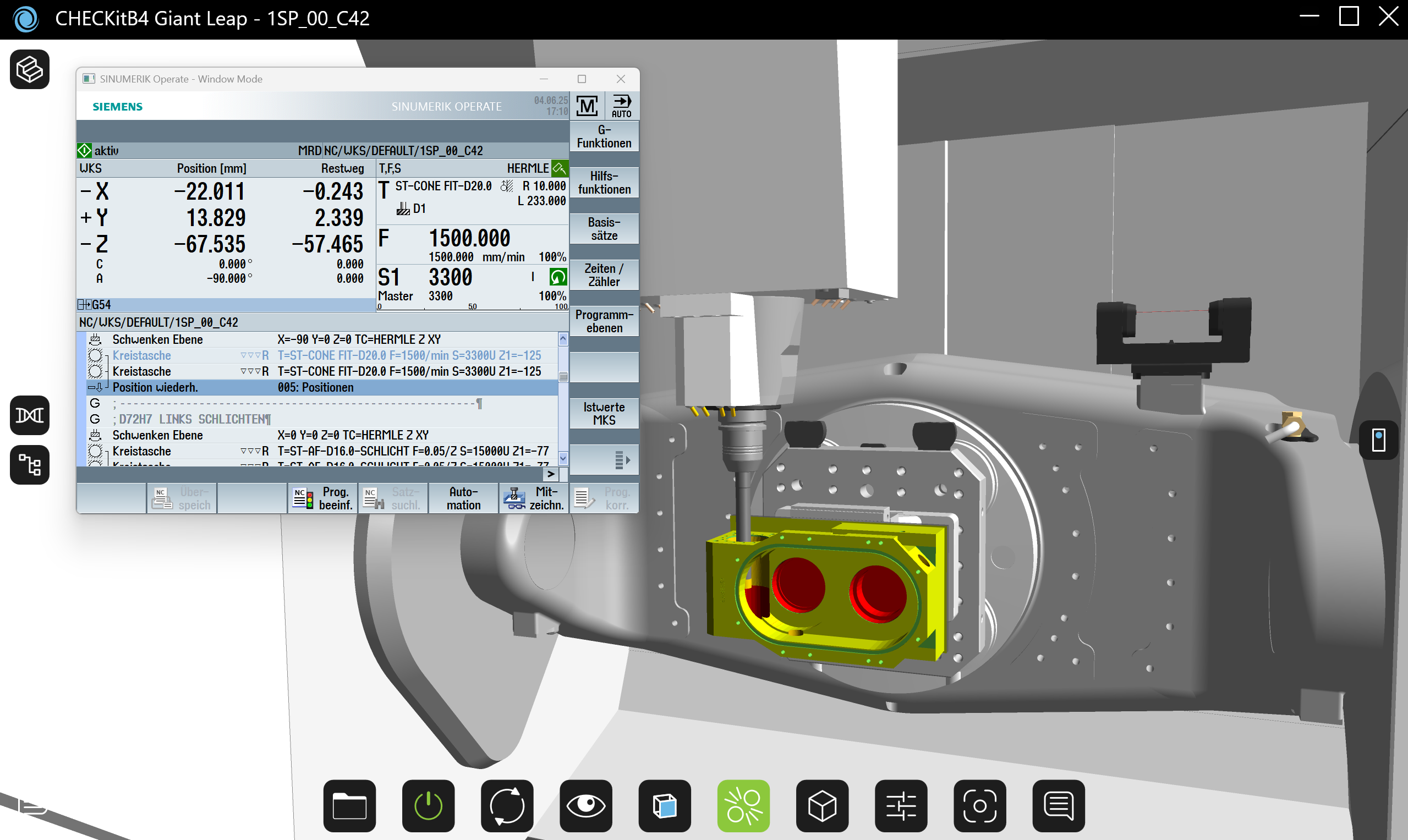
Training on the Virtual Machine
The digital twin provides a safe learning environment - from the basics of CNC programming and machine operation to the specific behavior of an individual machine.
Rare or critical situations can be repeated and trained. On the real machine, this is often expensive, risky, or simply not possible during production.
Cross-Location Preparation
With a digital twin, programs, postprocessors, and workflows can be prepared and checked even when the real machine is elsewhere. This supports central CAM teams, distributed plants, and scarce specialist resources.
Manufacturing of course remains tied to the real machine. But preparation, prove-out, training, and knowledge transfer can be organized much better across locations.
Business Relevance
Thinking only about collision checking is too narrow. The larger value lies in earlier prove-out, building operator and programming knowledge, preparing new machines, and reducing tied-up machine time.
Especially with new machines or complex parts, the difference becomes visible: postprocessor, initial programs, tool concepts, fixture setups, and qualification can be prepared earlier. The real machine starts with fewer open points.
Business Value
The digital twin is not only relevant at the CAM workstation. It helps where machine investments need to become productive faster, prove-out must become more predictable, and knowledge must be available across teams and locations.
New machines, programs, and workflows can be prepared earlier. This reduces the critical time between installation, first program, and stable production run.
Part of the verification work moves from the machine into the virtual environment. This leaves more time for productive machining.
Programmers, process planners, and operators can engage with machine, control, and workflows before everything comes together on the real machine.
Virtual machine environments make it easier to prepare programs, standards, and experience consistently across plants and teams.
Customer story
Pöttinger replaced a flexible manufacturing system during ongoing operations. With a digital twin and CHECKitB4, a major part of commissioning was moved before the real machine run.
Task
An existing flexible manufacturing system had to be replaced during ongoing production in only twelve weeks.
Solution
Four Heckert H75 machines, Promot automation and CHECKitB4 from Pimpel were combined with a realistic digital twin for virtual commissioning.
Customer value
Significantly shorter run-in phase, high process reliability from production start and around 20 percent more productivity.
„For us, this investment is a clear commitment to the location. It shows that modern manufacturing, high quality and economic success can be combined in Austria when you are prepared to take new paths.“
FAQ
The following questions help distinguish the digital twin of a CNC machine tool from traditional simulation, G-code emulation, and pure 3D visualization.
Orientation meeting
We clarify which machines, controls, and processes are suitable for a digital twin and where virtual verification, commissioning, or training can create the greatest value.