Knowledge Wiki
CAM, CNC and digital manufacturing explained clearly
Technical articles for decision-makers, sales, CAM teams and manufacturing: practical knowledge instead of product brochure language.
CAM Automation
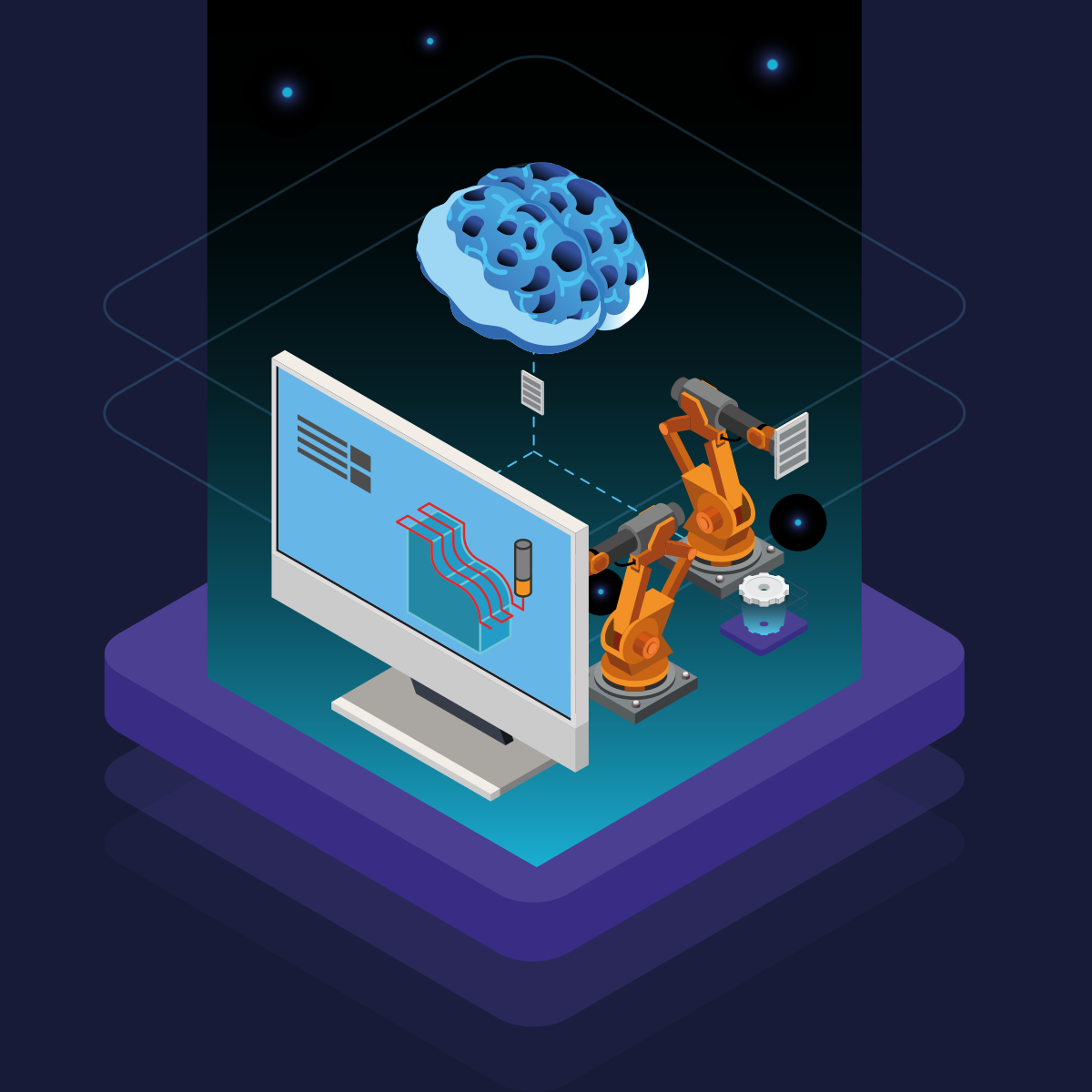
CAM automation for recurring programming tasks
CAM automation saves programming time when recurring machining operations are defined with validated tools, strategies, and machine data.
Read articleCAM Turning

CAM for lathes with turrets, subspindles, and multiple channels
CAM for lathes must represent tool orientation, workholding, spindle speed limits, turrets, subspindles, and NC output for the actual machine.
Read articleCAM Milling

CAM for milling machines from 2.5D to five-axis machining
CAM for milling machines combines toolpaths, setup, tool data, machine kinematics, the postprocessor, and simulation into a verifiable manufacturing process.
Read articleCAM Multitasking

CAM for multitasking machines with mill-turn and multichannel operation
CAM for multitasking machines coordinates turning and milling operations, spindles, tool carriers, channels, and part transfers in one shared sequence.
Read articleCAM Postprocessors

CAM postprocessors for machine- and control-specific NC code
A CAM postprocessor generates NC code for a specific machine and control. Documented tests determine the exact scope for which the output is approved.
Read articleNC Code Simulation

NC code simulation after postprocessing
NC code simulation checks the posted G-code or NC code. The interpreter, machine model, tools, and setup must match the real production environment.
Read articleCNC Digital Twin
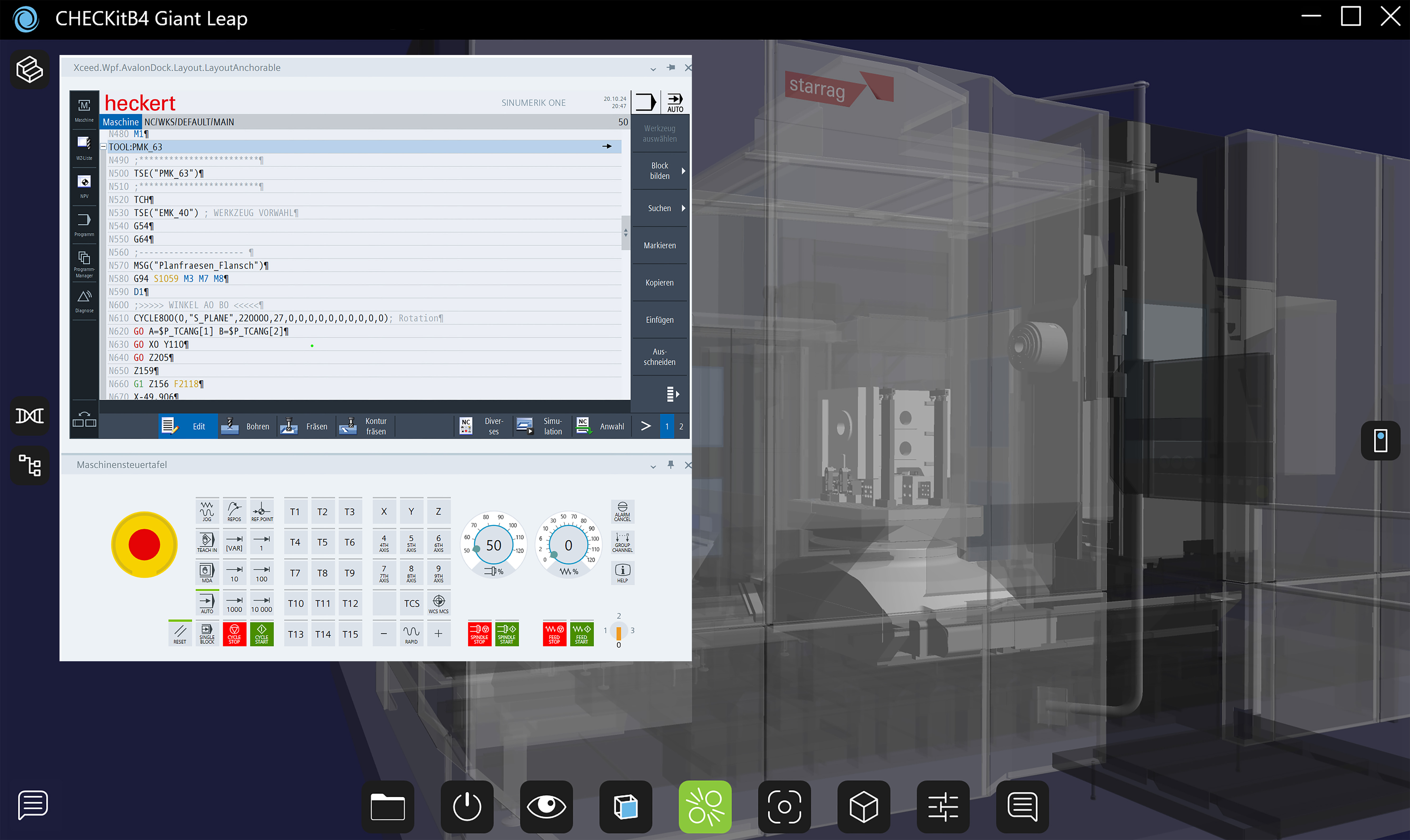
Digital twin of a CNC machine and its verification depth
A CNC digital twin provides useful results only when the machine model, control representation, data revision, and intended task are aligned.
Read article