Mechanical engineering / woodworking
Weinig checks WOP programs with CHECKitB4 before the real machine run
Weinig uses digital twins of CNC machines to verify workshop-oriented programs virtually and increase process reliability on the shopfloor.
Weinig Gruppe
Task
WOP programs and single parts had to be checked safely before the real machine run, without non-productive times and without trial and error on an occupied machine.
Solution
Together with Weinig, Pimpel built a digital twin of the Kekeisen UBF 2500 and integrated CHECKitB4 into tool management and manufacturing data management.
Customer value
Greater safety in the virtual machine run, better manufacturing documents, fewer errors on the shopfloor and around 35 percent more productive hours in comparison.
Technical context
„We recorded an increase of around 35 percent in productive hours.“
User report
Process-safely ahead at full feed
The Weinig Group uses CHECKitB4 to verify NC programs not only through classic G-code simulation, but on an executable virtual machine. For the machine builder from Tauberbischofsheim this is especially important because solid wood and wood-based material machining require high process reliability and connected workflows.
Initial situation
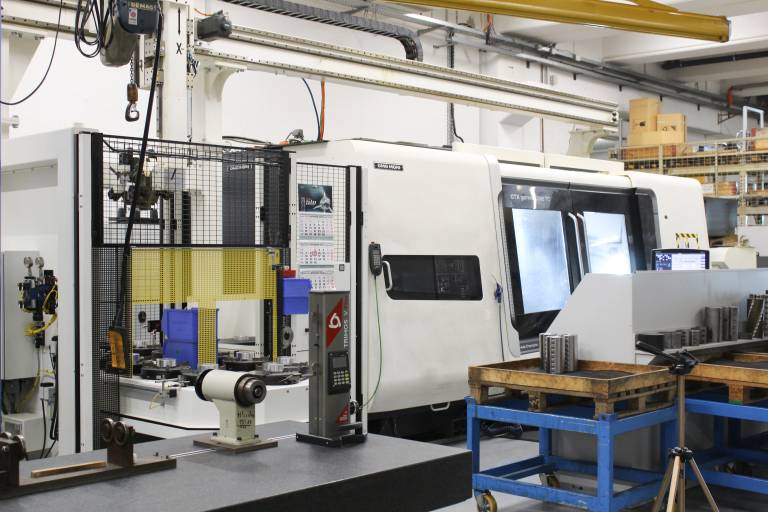
Around 50 cutting machines of different ages are operated at the main plant. Some parts are still programmed in a workshop-oriented way, although the medium-term strategy clearly points towards CAM programming. Simple parts are sometimes created directly at the machine without generating additional non-productive time.
Pilot project on the Kekeisen UBF 2500
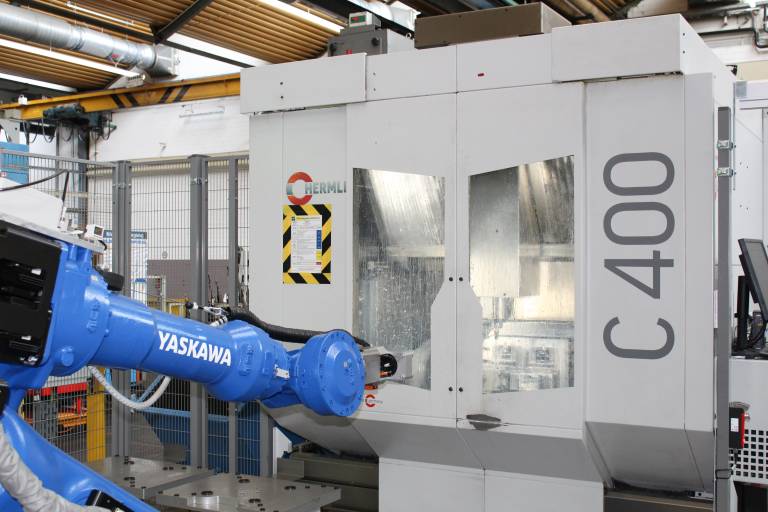
Weinig chose a Kekeisen UBF 2500 as the pilot station. It machines welded assemblies that have already gone through a long production chain. Errors at this point would be expensive. The goal was to significantly reduce programming errors directly at the machine through a virtual test run.
Solution with CHECKitB4
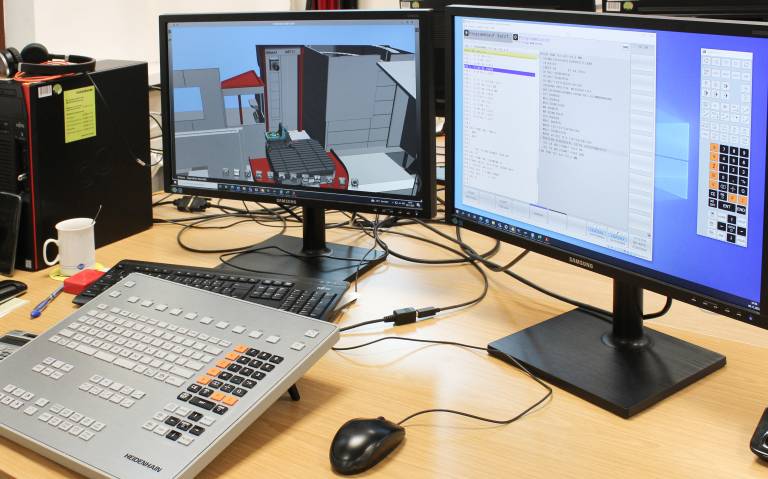
Together with Pimpel, a digital twin of the machine was created. The CNC control of the virtual system corresponds to the real machine control. The actual programming process remained the same for machine operators. What was new was that clamping, blank and machine run could be checked virtually in advance.
Integration into the data flow
Weinig, Pimpel and Coscom created a direct connection from the WOP world to manufacturing data management and tool management. The goal was not only simple transfer of tool data, but the integration of CHECKitB4 into the COSCOM ECO platform.
Value on the shopfloor
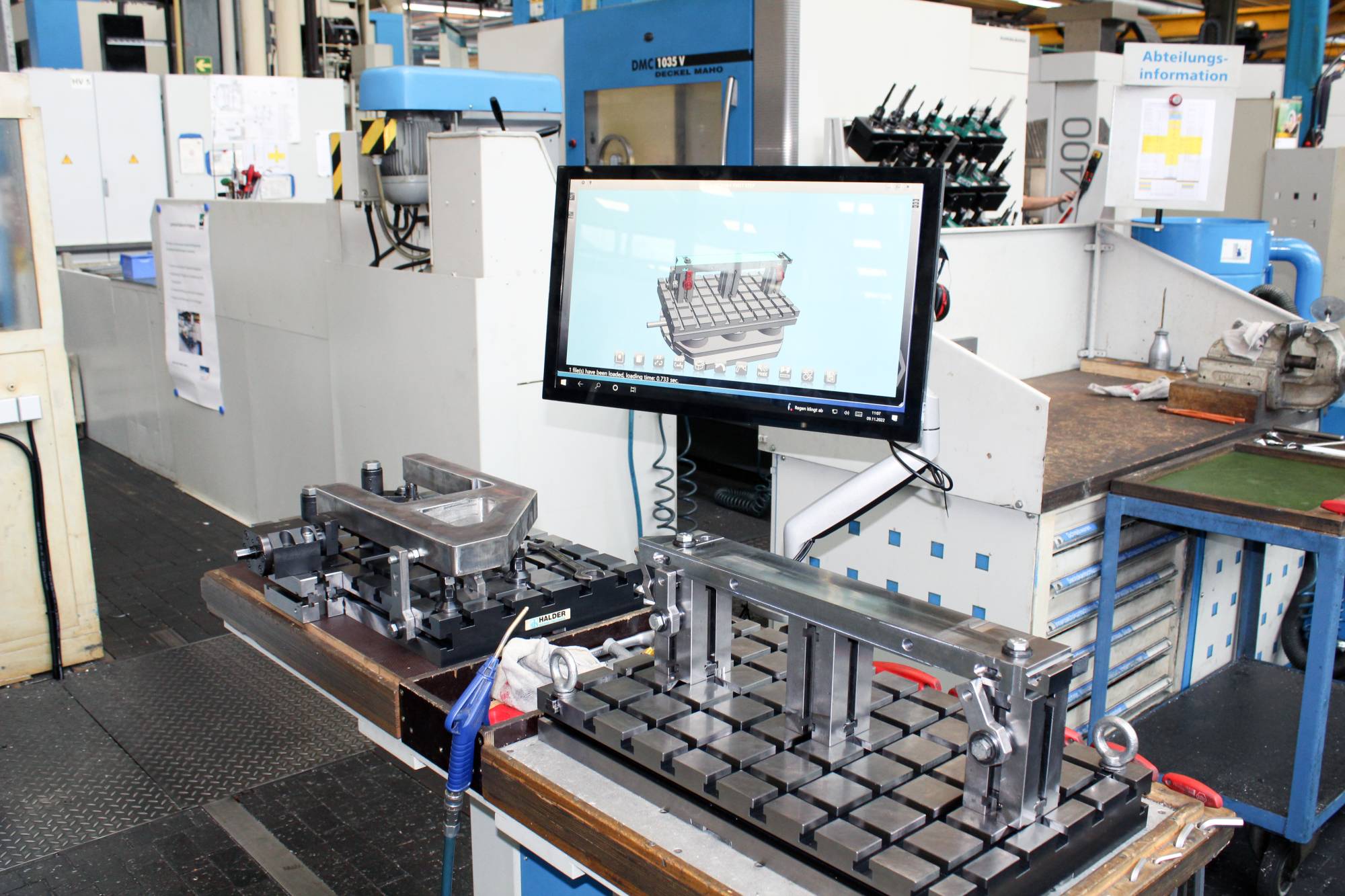
The virtual machine run brought safety to everyday work. Manufacturing documents can be generated without additional effort and provided at the machine on a tablet PC. Clamping situations can be viewed from different perspectives, with elements zoomed, shown or hidden.
Reality check instead of trial and error
Weinig manufactures very small batches and single parts and cannot afford a trial-and-error approach. CHECKitB4 provides more precise verification than pure G-code simulation because it considers not only kinematics, but also control behavior and machine parameters.
Result
The introduction of ESPRIT and CHECKitB4 showed clear results: machine running times increased noticeably. In the before-and-after comparison, productive hours rose by around 35 percent. At the same time, limit switch errors, movements, under- and oversize and other machine-specific points become visible before the real run.
Outlook
Weinig plans to use digital twins more strongly for training in the future. The company is also working on AR-supported setup, where setup information stored in CHECKitB4 is used as a virtual model and compared with the real situation.